Example
Betty Sue Washington
Clarksdale, Mississippi · Born March 12, 1947
This is what $99 looks like. Open each thing, then tell us who should receive yours.
What you receive
Three files. That is the package.
01
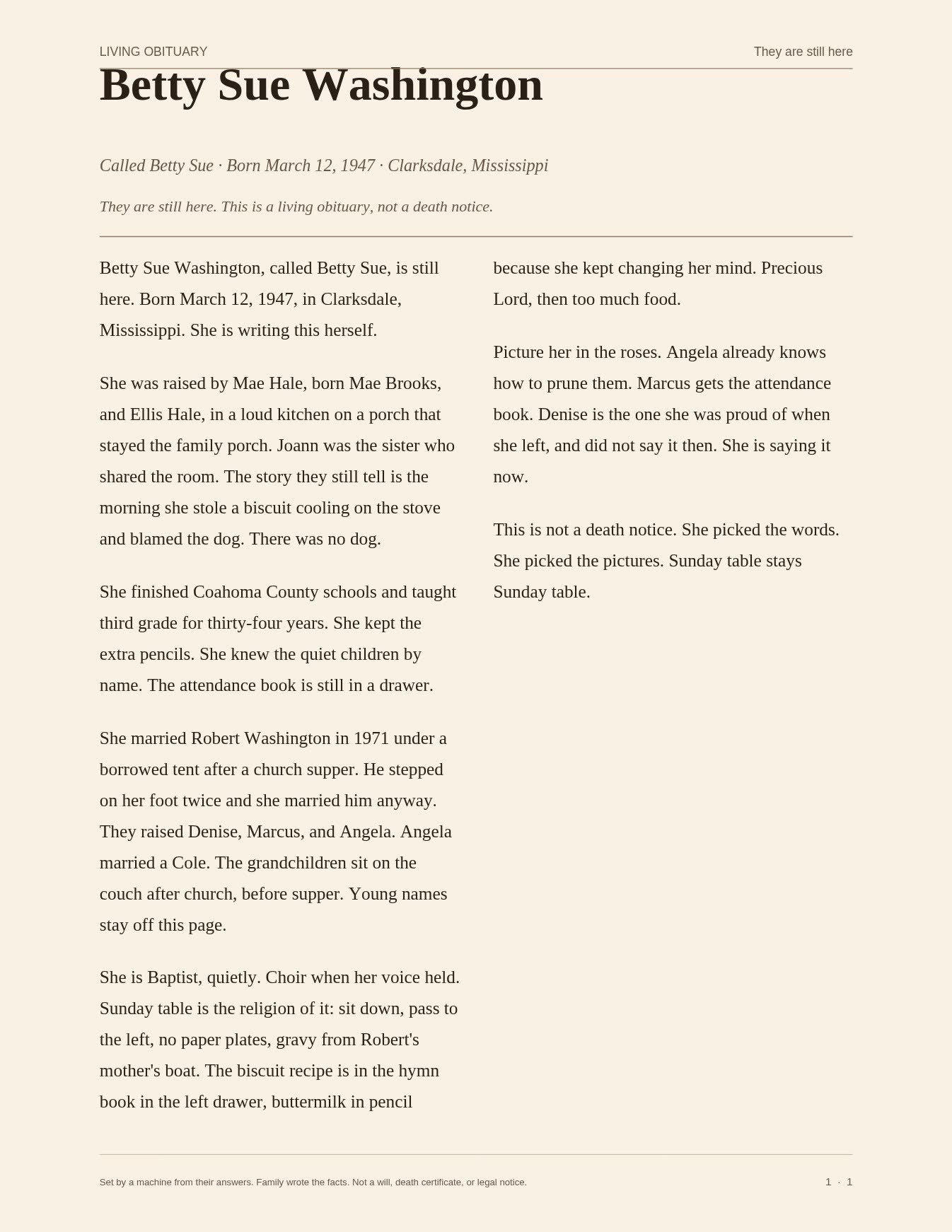
Traditional newspaper obituary
A PDF to print, and a Word document you can edit. Use it however you want — including the local paper.
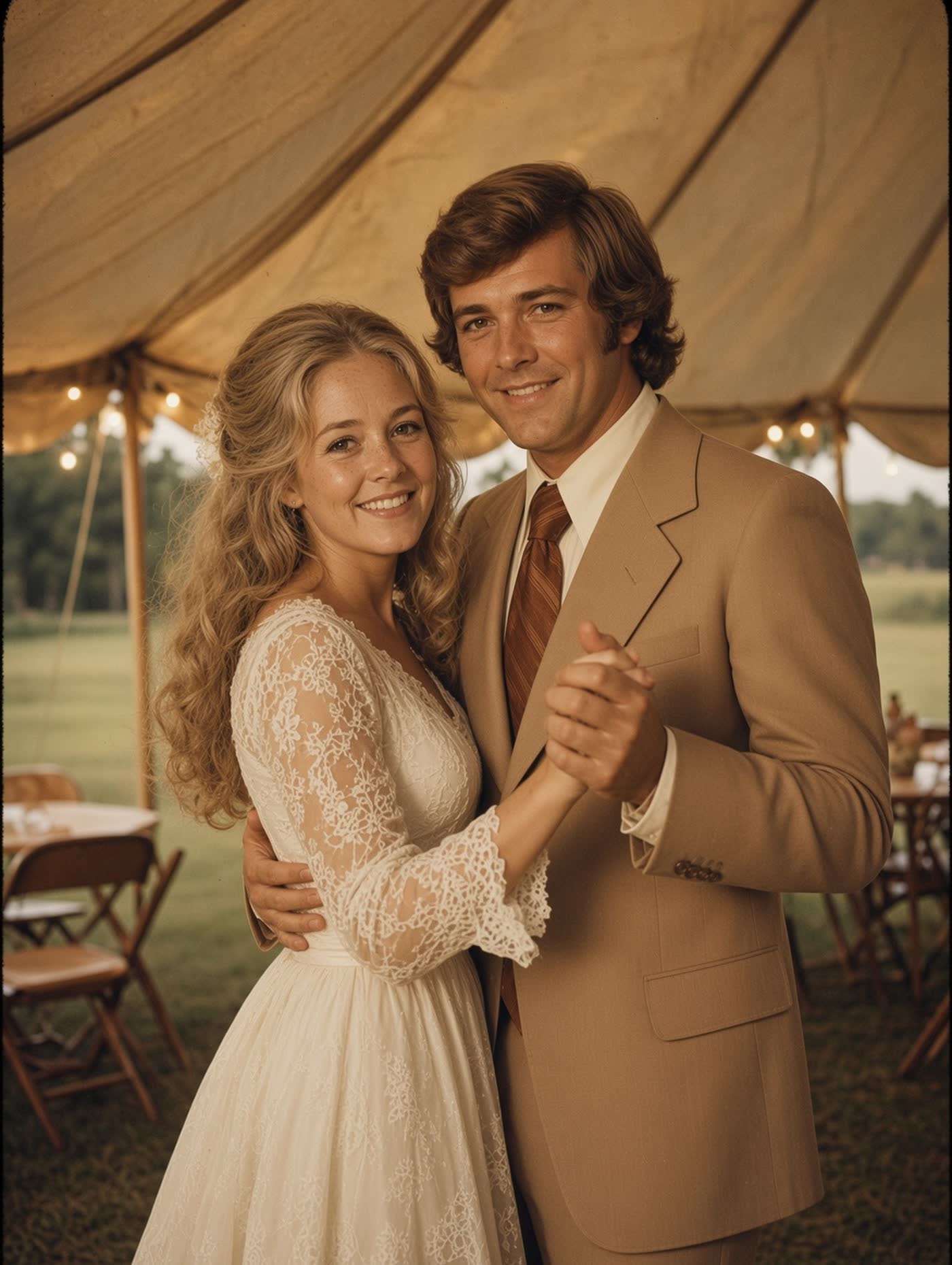
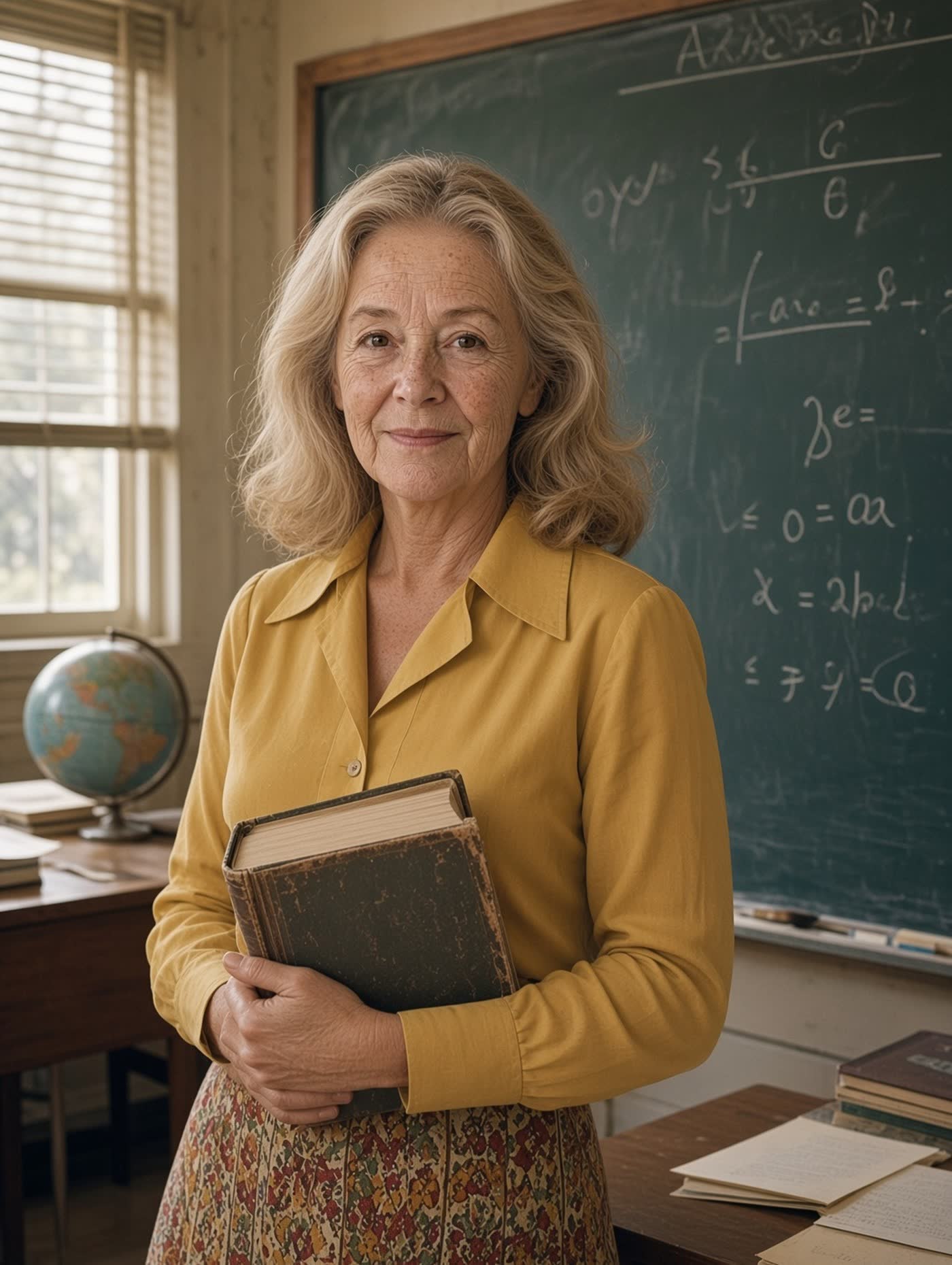
Look at each one
The page, the photo pages, and the film.
Every question. Every answer.
Betty Sue answered 52 of 79. The full list they answered, with the answers — a keepsake from these days. Skipped ones stay out. The newspaper page is made from these.
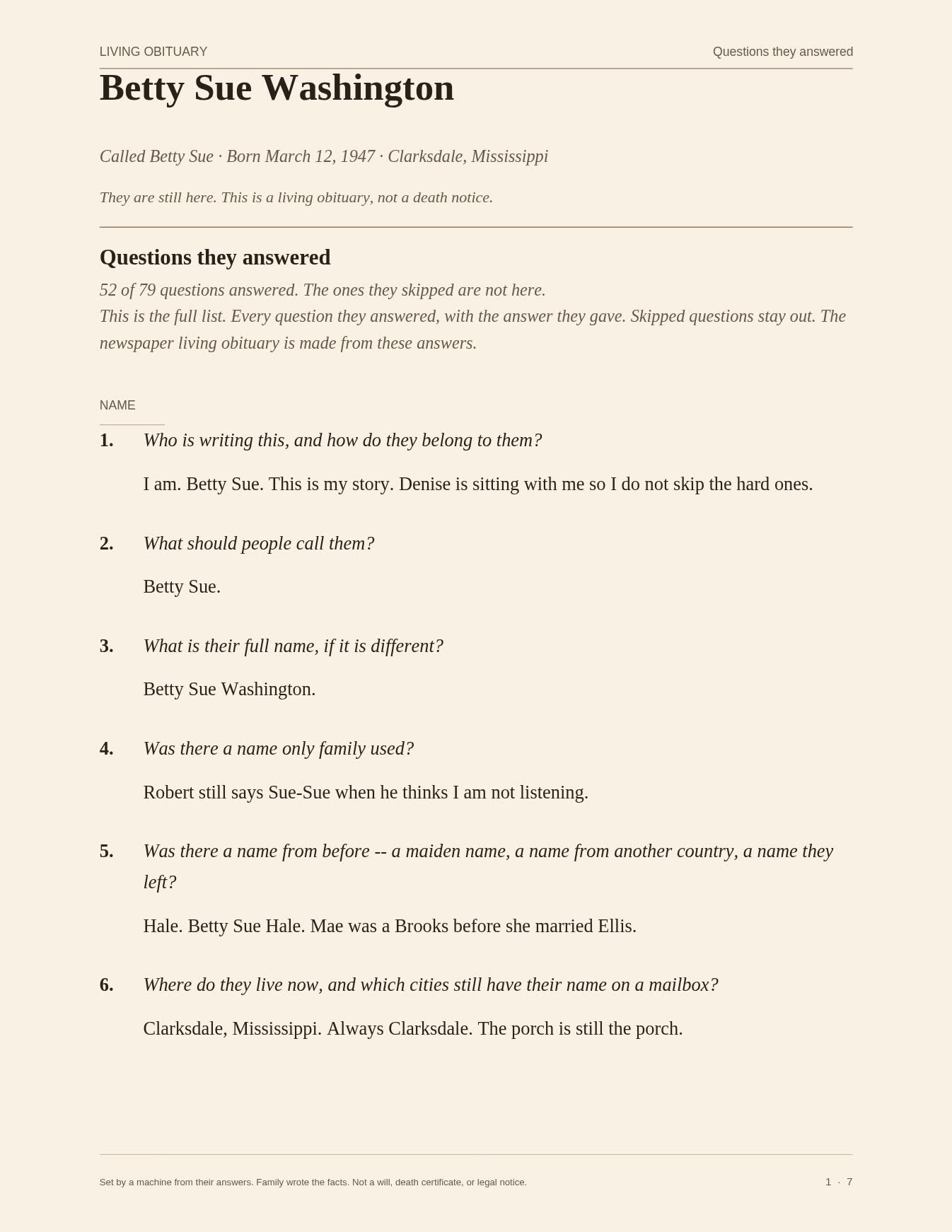
Click to open the full question-and-answer PDF.
Open the newspaper obituary to see how these answers read as a newspaper page.
Name
Your name, and how you know them
Write your name. Then say if you are their daughter, son, spouse, parent, or friend. If they are writing it themselves, say so.
I am. Betty Sue. This is my story. Denise is sitting with me so I do not skip the hard ones.
What should people call them?
The name on the story. A nickname is fine. Write it the way family says it out loud.
Betty Sue.
What is their full name, if it is different?
First, middle, last. Spell it. This is the line a newspaper would print in the first sentence.
Betty Sue Washington.
Was there a name only family used?
The kitchen name. The one on a lunchbox. The one a spouse still uses. Skip if the first name is enough.
Robert still says Sue-Sue when he thinks I am not listening.
Was there a name from before — a maiden name, a name from another country, a name they left?
The name they were born with. The name on an old license. Skip if they have always been this name. Do not add maiden names of living people who are not them.
Hale. Betty Sue Hale. Mae was a Brooks before she married Ellis.
Where do they live now, and which cities still have their name on a mailbox?
The town they wake up in, and the ones they never really left. City and state. Do not write a house number or a street of a living person — that is how thieves work. A newspaper prints the city.
Clarksdale, Mississippi. Always Clarksdale. The porch is still the porch.
Beginning
When were they born, and where?
The date if you have it, and the town. A year is enough if the day is gone, or if they do not want the full date in print. A newspaper uses this for the first sentence.
March 12, 1947. Clarksdale, Mississippi.
Who raised them? Name those people.
Mother, father, a grandmother, an aunt, the ones who did the raising. Write the names, not the roles only.
Mae Hale and Ellis Hale. Mae did the raising. Ellis did the garden.
What were their parents' names — including a mother's name before she married, if you have it?
Newspapers ask this every time so the story can name their people. Their mother's name before she married. Skip if you do not have it. Do not add maiden names of living people who are not them.
Mae Brooks Hale. Ellis Hale.
Where did they grow up, and what did that place feel like?
The town, the house, the street, the kitchen. Was it loud? Small? A porch. A child can answer this.
Clarksdale. A loud kitchen. A porch that never got painted the same color twice. Heat. Hymns through the wall.
Who did they grow up with — sisters, brothers, cousins in the same house?
Name the children in that house. The one they shared a room with. Skip if they grew up alone.
Joann. She had the other bed. We fought over the window.
What is one story from when they were little that still gets told?
The story that comes out at the table. Who tells it. It can be small. Small is often the true one.
I stole a biscuit cooling on the stove and blamed the dog. There was no dog. Joann still tells it.
Which towns or houses still count as home?
Every place that still has a hold on them. The town. The house they mean. A river. A pew. Not a current street number.
Clarksdale. That porch. The classroom on Fourth.
School and work
Where did they go to school, and what did they finish?
A grade school, a high school, a trade, a degree, a certificate. The year if you have it. Skip if it does not apply.
Coahoma County schools. Then I taught. I did not need a speech about it.
What work did they do, or how did they spend their days?
A job, a farm, a classroom, the work of a house, the work of being here. What would they say if you asked at dinner.
Third grade. Thirty-four years. Extra pencils. The quiet children by name.
Who did they work for, and for how long?
The company, the mill, the district, the shop. Thirty-one years in a room is a life. A number helps.
The Clarksdale schools. Thirty-four years in a room that smelled like chalk and orange peels.
What were they known for at work — the thing a coworker would say without thinking?
On time. The one who brought extra. The one who stayed. A nickname from the floor. Skip if they never had that kind of work.
She knew the quiet ones. She kept the extra pencils. She did not raise her voice.
Was there unpaid work that was still the work of a life — a house, a farm, a child, a parent they kept?
The work that never had a title. Raising people. Keeping a place. Skip if the paid work was the whole of it.
Sunday table. Three children. The roses. Mae at the end, in our front room.
Love
Who do they love?
Write the names. People first. Animals if they count. This is the list a newspaper would get wrong if you rush it.
Robert. Denise, Marcus, Angela. The grandchildren. Joann, even when she is wrong.
Is there a spouse or a partner they built a life with? When did that begin?
The name, and the year if you have it. How long is a kind of proof. Skip if this is not their story.
Robert Washington. 1971. He is still here too.
How did they meet that person, if there is one?
The room, the town, the friend who introduced them, the shift they both worked. A scene, not a summary. Skip if there is not one.
Church supper. He asked if the potatoes were mine. They were Mae's. I said yes anyway.
Where did they marry, or begin, if they want that day named?
A church, a courthouse, a kitchen, a date. Skip if they do not want that day in it, or if there was not one.
Under a borrowed tent. Clarksdale. 1971. He stepped on my foot twice.
Who are their children? Name them.
Each child. The order they came. Whose they are if that matters. A living obituary that says 'three children' and no names has failed — unless they asked for a number only.
Denise, then Marcus, then Angela.
If a child married or made a life with someone, who belongs in that sentence?
The sons- and daughters-in-law. The partner a child brought home. Newspapers ask this so nobody is left off the pew.
Angela married a Cole. Put him in it. He shows up for Sunday.
Who are the grandchildren, and the little ones after that?
Names if they want them in print. A number is enough if the list is long, or if the children are young and they want them quieter. Great-grandchildren too. Someone will count.
Five of them. The little ones stay a number. They sit on the couch after church.
Do they want young children's names in print, or only that the children exist?
A newspaper will print every name you give. Young children cannot take that back. Names if they want them. A number if they want those children quieter. Skip if there are no young children.
A number. They are young. They can have their names back later.
Who already left, that this story should still name?
A parent, a spouse, a child, a friend. The year if it helps. Only if they want them in it. Skip if they do not. This is people they lost — they themselves are still here.
Mae. Ellis. 2011 and 2004. Name them.
Faith and belonging
Is there a faith, a church, or a quiet they keep instead?
A congregation. A hymn. A way they pray. Or a quiet. All of those are a full answer. Skip if they keep this private.
Baptist, quietly. I do not need a speech.
If there is a congregation, what did they do there — choir, kitchen, usher, just the pew?
The work of showing up. A committee. The coffee. Skip if they did not have a church, or only sat.
Choir when my voice held. Then the kitchen. Then the pew.
If people want to give, is there a church, a cause, or a place that should receive it?
Only if they have one. A food pantry. A school. A shelter. Skip if they do not want this said. This is not a funeral plan.
The school. Extra pencils. Not flowers I cannot water.
Texture
What did they love to do when nobody was watching?
The garden, the kitchen, the trail, a tool, a book, a game, the chair and the window. Private joy is the true one.
The roses. The hymn book with the recipe in it.
What food, music, team, or place would make a stranger know it was them?
Biscuits. A hymn. A ball club. A porch. A radio station. Be specific enough that family laughs.
Biscuits. Precious Lord. Sunday gravy. No paper plates.
What did they cook, or refuse to cook, that family still talks about?
The dish. The recipe in a hymn book. The thing they would not eat. Skip if food was never the point.
Biscuits. The buttermilk amount is in pencil in the hymn book in the left drawer because I kept changing my mind.
What did they say, over and over, that family can still hear?
A saying. A joke. A rule about Sunday. Write it in their words, not yours.
Sit down. Pass to the left. That is the whole religion of it.
What gathering, holiday, or Sunday was theirs?
The table they set. The day nobody missed. Who sat where. What had to be on the plate.
Sunday table. Gravy from Robert's mother's boat. Too much food. That is how we tell the truth here.
Is there a place they want people to picture them — a chair, a garden, a trail, a kitchen?
Not a cemetery. The room they were most themselves in. Where the light was.
The roses. Then the kitchen. Not a hospital bed.
Who they were
If I sat next to them for an afternoon, what would I notice first?
Voice. Hands. How close they sat. Whether they offered food before they offered talk. The first true thing.
I will feed you before I ask you a question. My hands. The garden dirt that does not come out.
How did they show love without saying the word?
A ride. A plate left in the oven. A letter. Showing up early. Fixing the thing you had not asked about yet.
A plate left in the oven. Showing up early. I was proud of Denise when she left. I should have said it then. I am saying it now.
What could they not stand, that people who knew them already know?
Lateness. A paper plate on Sunday. Waste. Being fussed over. The dislike is often a value in work clothes.
A paper plate on Sunday. Being fussed over. People who will not sit down.
What would be the first thing someone would miss in the house?
A sound. A smell. A chair scraped back. The TV at a certain hour. Name the empty thing.
The gravy boat. The hymn book in the left drawer. Sunday at two.
Pictures
What photographs belong in the ten-minute film?
About forty pictures makes ten minutes. Name the days, not every file. Garden, classroom, wedding, porch, the ordinary Tuesday. Only photographs family has the right to share.
The classroom. The tent. The roses. Sunday table. The couch after church. Not a hospital.
Which days have to be in the pictures — a wedding, a porch, a classroom, a child?
The days that would make the collage a lie if they were missing. One or four is enough.
The classroom. The wedding. The roses. Sunday table.
What should we leave out of the pictures?
A hospital room. A person. A time they do not want shown. Be plain. We will obey this.
No hospital. No machines. I am not that photograph.
The story
What should people remember?
The true thing, not the pretty thing, if those are different. This is the sentence under their name.
Sunday table stays Sunday table. I was not afraid of the quiet. Keep the roses watered.
What were they proud of, even if they never said it loud?
Work. A child. Staying. Getting out. Getting through. Staying married. The garden. Say it for them if they will not.
Denise leaving. The quiet children who could read. Thirty-four years.
What do they want the people who love them to know, while they can still say it?
Said now, while they are here. Not a speech. A few lines is enough. This is not last words. It is living.
I am still here. This is the story I will leave. Tell them I was not afraid of the quiet.
Is there one sentence they want in the written story?
The line that has to be in it, in their words. We will not rewrite this line.
Sunday table stays Sunday table.
What should this story not say?
A marriage. An illness. A name. A cause of anything. Never a Social Security number, a bank number, or a house number. The thing family would be angry to see in print. Skip if nothing is off limits.
Do not put a house number. Do not put the little grandchildren's names.
What should the grandchildren remember about Sunday table?
A few sentences is enough. Names help. Skip if this does not fit.
The gravy boat was Robert's mother's. Do not use a paper plate. Sit down. Pass to the left. That is the whole religion of it.
Where is the biscuit recipe?
A few sentences is enough. Names help. Skip if this does not fit.
Inside the hymn book in the left drawer. The one with the blue ribbon. The buttermilk amount is written in pencil because I kept changing my mind.
What do you want someone you love to know that you never said out loud?
A few sentences is enough. Names help. Skip if this does not fit.
I was proud of her when she left. I should have said it then. I am saying it now.
Who gets the roses?
A few sentences is enough. Names help. Skip if this does not fit.
Angela. She already knows how to prune them. Marcus gets the attendance book. He liked the names.